
Why animal activity can affect roof integrity
In Clifton Park, NY, animals can damage a roof gradually rather than through one dramatic event. Squirrels, raccoons, birds, bats, mice, and other wildlife may use small gaps around the roofline, vents, chimneys, soffits, or fascia to reach shelter.
The roof is more than its visible shingles. Its integrity also depends on the underlayment, flashing, decking, ventilation system, insulation, framing, and drainage details. Animal activity can affect several of these components at once.
A small opening may admit water, cold air, insects, and larger animals. Once an animal begins enlarging that opening or building a nest nearby, the original problem can become a leak, ventilation failure, or structural concern.
Which animals are most likely to damage a roof?
Different animals create different types of damage.
Squirrels are frequent roof intruders because they can climb trees and reach roof edges easily. They may chew through plastic vent covers, deteriorated wood, soffit panels, and trim. Their gnawing can enlarge a small opening quickly. Squirrels may also carry nesting material into attic spaces.
Raccoons are heavier and stronger. They can tear loose shingles, bend flashing, pull apart weak soffits, and widen openings around roof vents or chimneys. A raccoon entering an attic may disturb insulation and leave feces or nesting debris behind.
Birds commonly use chimneys, ridge vents, gable vents, and damaged roof edges. Nesting material can block ventilation or collect moisture. Some birds may also peck at vulnerable wood or pull apart existing materials.
Bats typically enter through very small gaps near roof edges, vents, and flashing. The roof damage may be limited, but repeated entry can lead to guano accumulation and contamination in attic areas.
Mice and other rodents may enter through openings near eaves, utility penetrations, or roof-wall intersections. They can chew insulation and wiring after reaching the attic.
How do animals get onto a roof?
The most common access routes are trees, attached structures, and already-weakened roof components. Branches that touch or closely overhang the roof can provide a bridge for squirrels, raccoons, and other climbers.
Bird feeders, spilled seed, unsecured garbage, pet food, and nearby nesting areas can increase animal activity around a home. A roof may then receive more traffic even if the animals are not entering the attic immediately.
Animals often take advantage of damage caused by age, moisture, wind, or winter weather. A loose fascia board, cracked vent cover, lifted shingle, or deteriorated soffit can become an entry point. In areas that experience snow, ice, freeze-thaw cycles, and strong seasonal temperature changes, small weaknesses may become more noticeable over time.
What signs suggest wildlife has affected the roof?
Some signs appear outside, while others are easier to notice from inside the attic.
Look for:
- Missing, torn, or displaced shingles
- Scratches or gnaw marks near vents, trim, and roof edges
- Damaged screens on gable or ridge vents
- Loose soffits, fascia, or drip-edge components
- Nesting material near vents or inside attic spaces
- Droppings, strong odors, or dark smudge marks near entry points
- Scratching, scurrying, or movement sounds
- Insulation that has been compressed, scattered, or pulled apart
- Daylight visible through roof decking or wall joints
- Water stains that appear after animal activity or heavy weather
A single squirrel crossing the roof is not necessarily a roofing problem. Concern increases when there are repeated visits, visible damage, sounds in the attic, or evidence that an opening is being used.
Can animals cause roof leaks?
Yes. Animals can cause leaks directly by damaging the roof covering or indirectly by interfering with drainage and ventilation.
A raccoon may lift shingles or disturb flashing. A squirrel may chew around a vent pipe or roof vent. Birds may push nesting material into a drainage path. Once the protective outer layer is compromised, rain and melting snow can reach the underlayment or roof decking.
The first visible water stain may appear far from the actual entry point. Water can travel along rafters, roof decking, insulation, or framing before reaching a ceiling. For that reason, a ceiling stain should not automatically be blamed on the animal’s nest or the nearest roof feature.
Why are roof vents and soffits especially vulnerable?
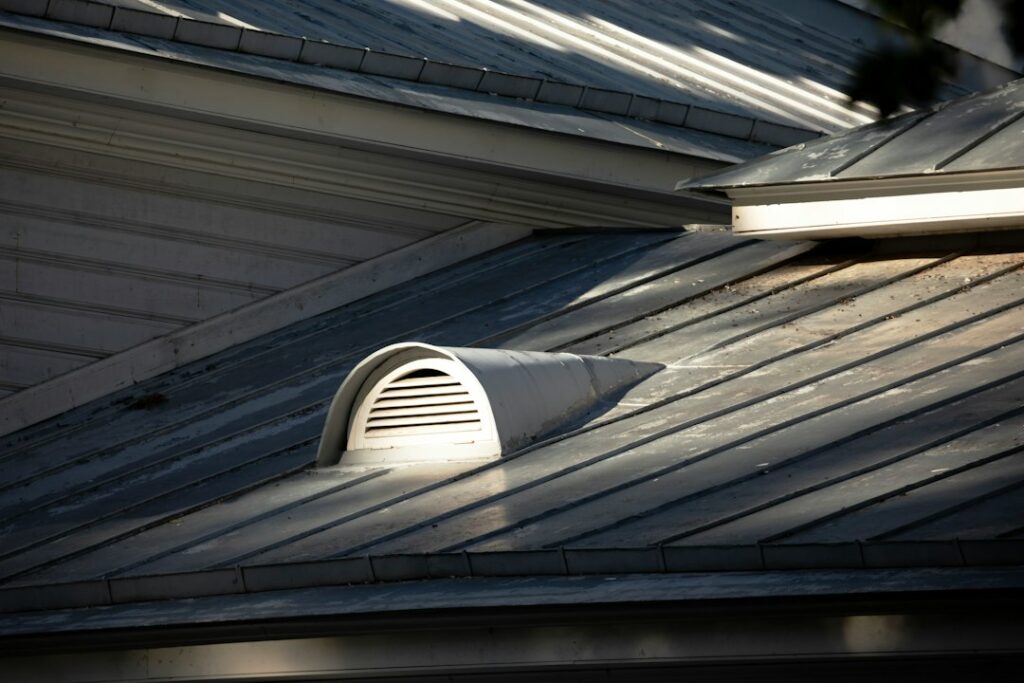
Vents and soffits contain openings by design, which makes them important for attic ventilation but also attractive to wildlife. Many use mesh, louvers, or thin protective materials that can weaken with age or be damaged by chewing and climbing.

Blocking a vent with a nest or animal-proofing material that is not suited to the vent can reduce airflow. Poor ventilation may contribute to condensation, damp insulation, roof-deck deterioration, and winter moisture problems.
Repairs should preserve the intended airflow. Simply covering a damaged vent without understanding its purpose can exchange an animal problem for a ventilation problem.
What should residents do if an animal may be inside the roof or attic?
Do not seal an opening immediately if an animal may still be inside. A trapped animal may chew through new materials, die in an inaccessible space, or become separated from dependent young.
Avoid reaching into dark spaces, disturbing nests, or attempting to handle wildlife. Keep children and pets away from the area. Scratching, hissing, strong odors, or visible droppings indicate that extra caution is warranted.
Some wildlife species are protected, and seasonal restrictions may apply to removal or exclusion. Safe resolution generally requires identifying the animal, determining whether young are present, allowing the animal to leave, and then repairing the entry point with materials appropriate for the location.
If a roof opening is large, the roof surface is steep or icy, or structural damage is visible, climbing onto the roof creates an unnecessary fall risk. Roof access is particularly hazardous after snow, freezing rain, or wet weather.
How can animal-related roof damage be prevented?
Prevention begins with keeping the roofline in good condition and reducing easy access.
Useful steps include:
- Inspect roof edges, soffits, fascia, vents, and chimney areas periodically.
- Keep branches from touching or closely overhanging the roof.
- Repair deteriorated wood and loose exterior trim before animals discover the opening.
- Use durable screening or guards that do not interfere with required ventilation.
- Keep garbage, pet food, and spilled birdseed secured.
- Clean nesting material only after confirming that no animals or young remain.
- Check attic spaces for moisture, odors, insulation disturbance, and daylight.
- Recheck repaired areas after major wind, snow, or ice events.
Prevention is more reliable when it addresses the reason animals are approaching the building. A repaired hole may not remain secure if nearby branches, food sources, or another weak roof component continue to provide access.
What is the difference between animal damage and ordinary roof wear?
Ordinary roof wear usually appears as widespread aging, granular loss, weathered shingles, or gradual deterioration across exposed surfaces. Animal damage is more likely to be concentrated near access points and may include irregular tearing, claw marks, gnawing, nesting material, or displaced components.
The two conditions can also occur together. An older roof may be more vulnerable to animal entry, while animal activity can accelerate damage that began with normal aging. Identifying both causes helps prevent a temporary patch from leaving the underlying weakness unresolved.
