
What is the difference between re-roofing and roof replacement?
Re-roofing adds a new layer of roofing material over an existing layer, while roof replacement removes the existing roofing system before installing a new one. The right choice depends on the roof’s age, condition, number of existing layers, ventilation, decking, and the type of damage present.
These terms are sometimes used interchangeably, but they describe different scopes of work. Re-roofing is a limited treatment that may improve the roof’s appearance and provide additional short-term protection. A full replacement allows the underlying components to be inspected and repaired or renewed.
What does re-roofing involve?
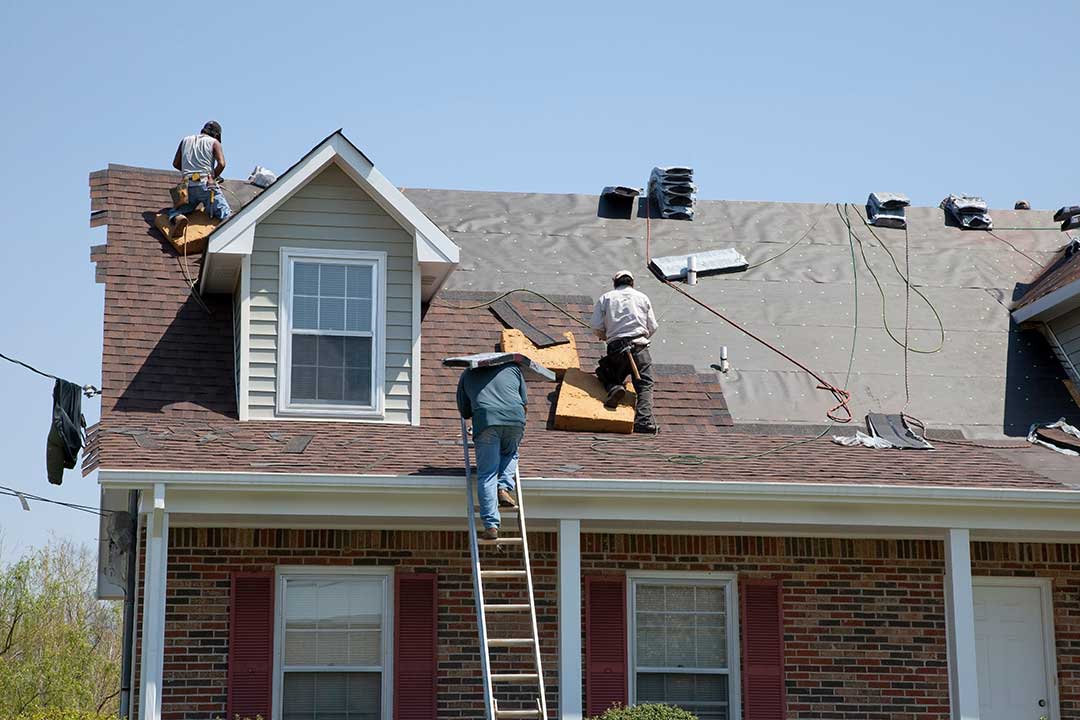
Re-roofing typically places a new layer of asphalt shingles over an existing layer. The old shingles remain in place, so the work can be faster and produce less tear-off debris than a complete replacement.
Re-roofing may be considered when:
- The existing roof has only one layer of shingles.
- The roof deck appears sound from available inspections.
- Damage is limited to surface wear rather than widespread leakage.
- The roof has reasonably consistent slopes without major sagging.
- Local building requirements allow an additional roofing layer.
- The new shingles are compatible with the existing roof system.
This approach does not correct every roofing problem. It mainly covers the visible roofing surface. Issues involving damaged sheathing, inadequate flashing, poor ventilation, hidden moisture, or structural movement may remain underneath.
A re-roof can also make future inspection more complicated because the older shingles and concealed defects are still present below the new layer.
What happens during a full roof replacement?
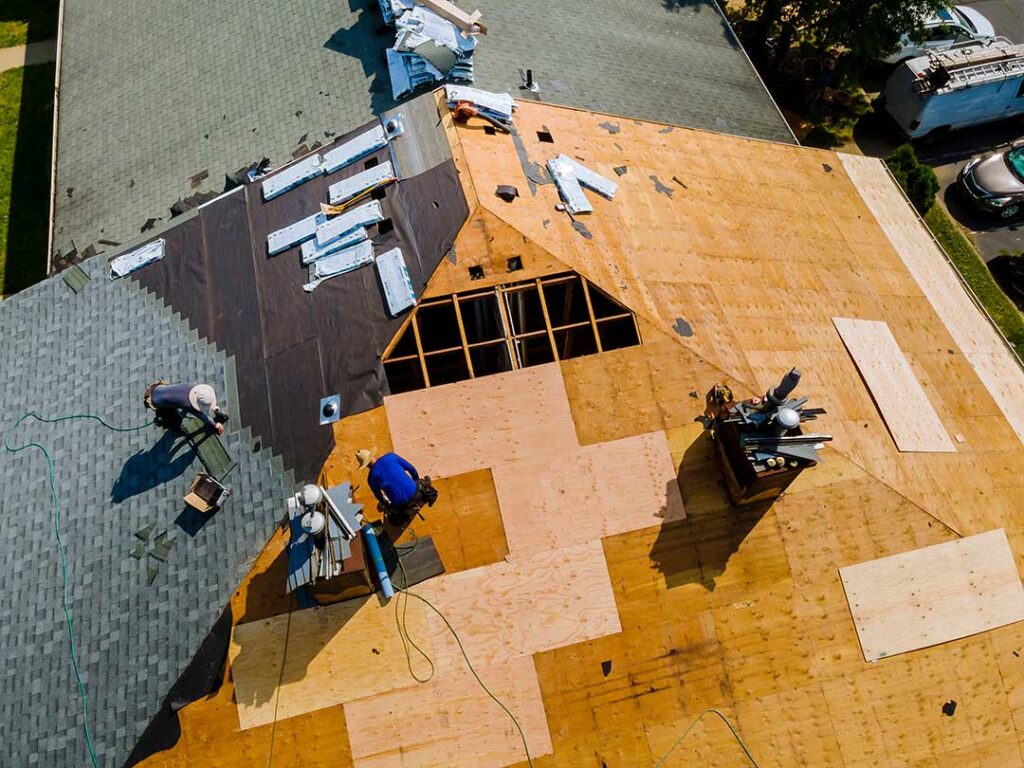
A full roof replacement generally involves removing the existing shingles and underlayment so the roof deck can be examined. Damaged or deteriorated decking may then be repaired before new underlayment, flashing, ventilation components, and shingles are installed.
A complete replacement may include:
- Tear-off and disposal of existing roofing materials.
- Inspection of the wood roof deck.
- Replacement of rotted, weakened, or water-damaged sheathing.
- Installation or repair of underlayment.
- Replacement or adjustment of flashing around penetrations and roof edges.
- Evaluation of ridge, soffit, and other ventilation components.
- Installation of a new outer roofing surface.
Because more of the roof assembly is exposed, replacement provides a better opportunity to identify the actual cause of leaks and premature wear. It is usually more disruptive than re-roofing, but it addresses more than the appearance of the shingles.
Is re-roofing suitable for homes in Clifton Park?
Re-roofing can be suitable for some homes in Clifton Park, but the local seasonal conditions make a careful inspection especially valuable. Roofs in the area experience freeze-thaw cycles, snow accumulation, ice formation, wind, rain, and changing temperatures throughout the year.
Repeated freezing and thawing can enlarge small gaps around flashing or damaged shingles. Snow and ice can also reveal weaknesses that were not obvious during warmer months. If moisture has entered the roof deck, placing another shingle layer over the surface may conceal the problem instead of correcting it.
Housing age and construction also matter. Some homes have roofs with older decking, multiple previous repairs, or ventilation systems that were designed before current roofing practices became common. A roof that looks acceptable from the ground may still have deterioration near valleys, chimneys, skylights, eaves, or areas where snow tends to collect.
How can a homeowner tell which option may be needed?
Visible shingle wear alone does not always determine the answer. The condition beneath the shingles is equally important.
Re-roofing may be less suitable when there are:
- Active leaks in multiple areas.
- Soft, spongy, or sagging sections.
- Repeated ceiling stains or damp attic insulation.
- Extensive moss, algae, blistering, or missing shingles.
- Damaged flashing around chimneys, vents, skylights, or wall intersections.
- Two existing layers of roofing material.
- Evidence of widespread deck damage.
- Poor attic ventilation or persistent condensation.
A full replacement is more likely to be appropriate when the roof has reached the later part of its expected service life and several problems are occurring at once. Replacing isolated shingles on an otherwise sound roof is different from covering a roof that has widespread deterioration.
An attic inspection can provide useful clues. Darkened wood, daylight visible through the roof deck, damp insulation, rusted fasteners, and mold-like growth may indicate moisture entry or ventilation problems. These signs do not identify the exact cause by themselves, but they suggest that a surface-only solution deserves careful consideration.
Does re-roofing cost less than replacement?
Re-roofing often has a lower initial cost because it involves less tear-off, fewer disposal requirements, and less labor. However, the lower upfront cost does not automatically make it the better long-term value.
If the roof deck or flashing is already failing, re-roofing may postpone the underlying repair. A later full replacement could then require removing both the newer and older shingle layers. The added materials can also increase roof weight, which may be a concern if the structure has existing weaknesses.
A full replacement usually costs more initially, but it provides access to the roof deck and allows concealed problems to be addressed at the same time. Comparing the two options requires looking beyond the price of the new shingles.
Can a roof be re-roofed more than once?
In many cases, roofing systems are limited to a maximum number of shingle layers under applicable building requirements. Adding layers also increases weight and may affect how well the roof sheds water, especially at edges, valleys, and flashing points.
A second re-roof may be unsuitable because:
- The roof already has multiple layers.
- The existing surface is uneven.
- Older shingles are brittle or curled.
- Flashing cannot be properly integrated with the new layer.
- The deck has unknown or suspected damage.
- The roofline shows sagging or structural movement.
The exact requirements can depend on the roofing material, property conditions, and applicable code provisions. A local building department or qualified building official can clarify permit and layering requirements for a specific project.
What are common misconceptions about re-roofing?
One common misconception is that new shingles automatically solve leaks. They may stop water from entering through worn shingle surfaces, but leaks can also originate from flashing, roof penetrations, valleys, wall intersections, or damaged decking.
Another misconception is that re-roofing always lasts as long as a full replacement. The durability of the new layer depends on installation quality, ventilation, substrate condition, drainage, exposure, and weather. If the old layer is already uneven or deteriorated, the new surface may not perform as expected.
It is also easy to assume that a roof must be visibly leaking before replacement is considered. Roof damage can progress beneath the surface, particularly around flashing and roof edges. A lack of interior staining does not prove that the roof deck is dry.
Which choice is better for a particular home?
Re-roofing is generally a surface-level option for a roof with one existing layer, limited wear, a sound deck, and no major underlying defects. Full replacement is more appropriate when the roof has widespread damage, multiple layers, structural concerns, repeated leaks, or concealed components that need inspection.
For residents, the most useful comparison is not simply “cheaper versus more expensive.” It is “surface improvement versus renewal of the roofing system.” Understanding that distinction helps avoid covering defects that should be repaired first.
Before work begins, the scope should clearly identify whether the project includes tear-off, deck inspection, flashing, underlayment, ventilation, and disposal. Those details determine what the finished roof actually addresses.
