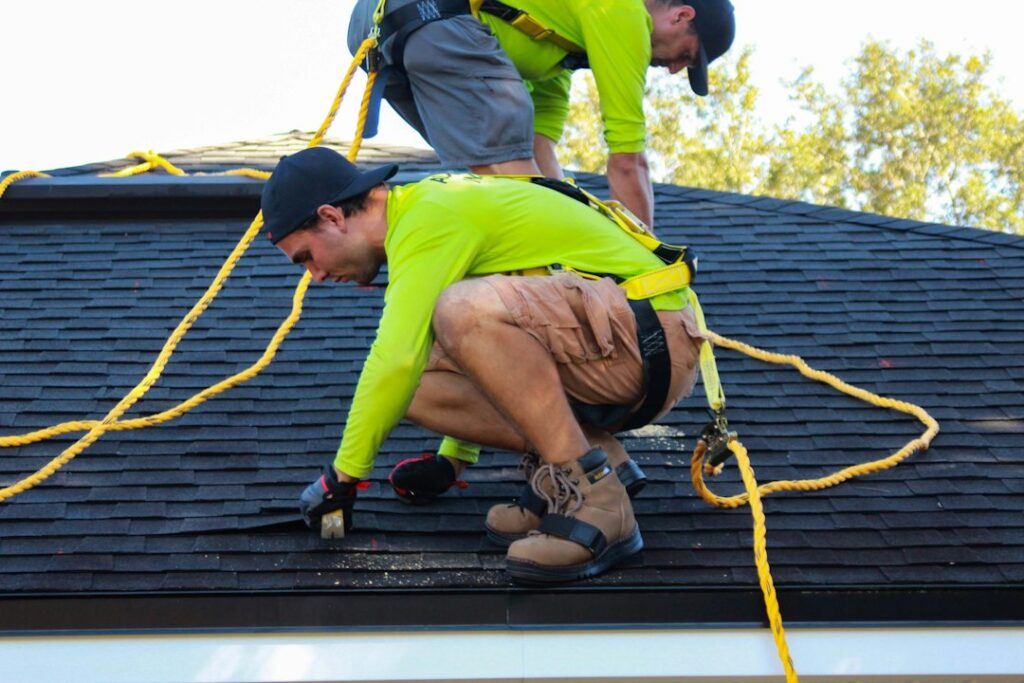
Roofing scams often appear after wind, hail, heavy rain, or winter weather exposes damage. A person may knock on the door, claim to have noticed a serious problem, and offer to make quick repairs before the homeowner has time to compare options.
For residents of Clifton Park, NY, the safest approach is to slow the process down, document the condition of the roof, and verify every important claim before signing anything or paying money.
What are the most common roofing scams?
Most roofing scams involve pressure, unclear pricing, unnecessary work, or a contractor who cannot be located after receiving payment.
Common warning signs include:
- An unsolicited door-to-door offer after a storm
- Claims that a roof needs immediate replacement without a written inspection
- Requests for a large cash deposit or full payment before work begins
- A price that is dramatically lower than every other written estimate
- Vague answers about insurance, materials, permits, or the company’s physical address
- A request to sign insurance paperwork or other documents immediately
- Promises to “take care of everything” with the insurance company
- A contract that does not describe the work, materials, payment schedule, and completion terms
A legitimate roofing contractor may identify urgent damage, but should still be willing to explain what was found and give the homeowner reasonable time to review the information.
Why are storm-related roofing offers risky?
Storm damage creates a natural sense of urgency. A roof may be leaking, insulation may be wet, or a fallen branch may have damaged shingles and flashing. Scammers use that pressure to encourage rushed decisions.
Some traveling contractors, sometimes called storm chasers, move from one affected area to another. They may collect deposits from several homeowners, perform incomplete work, or disappear before warranty problems can be addressed. A contractor who has no verifiable local presence can be difficult to track down later.
Weather in this part of New York can create several types of roofing concerns, including wind-lifted shingles, ice-related leakage, damaged flashing, and water entry around roof penetrations. Those conditions should be addressed, but not every visible problem requires a complete roof replacement.
If water is actively entering the home, temporary measures may be necessary to prevent further damage. Emergency protection is different from agreeing to a full replacement on the spot.
How can a homeowner verify a roofing contractor?
Verification should happen before any contract is signed or deposit is paid. A company name alone is not enough because similar names may be used by unrelated businesses.
Check whether the contractor can provide:
- A complete business name, physical mailing address, and working telephone number
- Proof of general liability insurance
- Proof of workers’ compensation coverage when applicable
- Recent references for comparable roofing projects
- A written description of the proposed work
- Information about material type, manufacturer, color, ventilation, flashing, and cleanup
- A clear explanation of who will obtain required permits or inspections
Call references rather than relying only on online reviews. Ask whether the project started and finished on time, whether the final price changed, and whether the contractor returned to address problems.
It is also reasonable to search the company name with terms such as “complaint,” “lawsuit,” or “scam.” A lack of online information does not automatically prove wrongdoing, but it means additional verification may be needed.
New York does not use one statewide home-improvement licensing system for every location. Requirements can vary by county or municipality, so residents should verify whether the work requires a local registration, license, permit, or inspection. The absence of a statewide license requirement does not eliminate the need to check insurance, references, written terms, and business identity.
What should a roofing contract include?
A roofing contract should be specific enough that a person who was not present for the conversation can understand what will happen.
The written agreement should identify:
- The contractor and homeowner
- The property address
- The exact scope of work
- The roofing materials and underlayment to be used
- Whether old roofing materials will be removed and disposed of
- Treatment of damaged decking, flashing, vents, gutters, and chimney areas
- Total price and payment schedule
- Expected start and completion dates
- Warranty terms and exclusions
- Responsibility for permits and inspections
- Procedures for change orders or unexpected conditions
- Cleanup and protection of landscaping, siding, windows, and driveways

For home-improvement work costing more than $500, New York requires a written contract with required consumer protections. Even when a project costs less, written terms are safer than relying on a text message or verbal promise.
Do not sign a blank document, incomplete estimate, assignment of insurance benefits, or agreement containing language that is not understood. Ask for time to review unfamiliar terms.
How much money should be paid upfront?
A homeowner should be cautious about any demand for full payment before work begins. Large upfront payments can leave little leverage if the project is delayed or abandoned.
A reasonable payment schedule should connect payments to actual progress. The final payment should not be due until the agreed work is substantially complete, debris has been removed, and required inspections or documentation have been addressed.
Avoid paying cash to a person who appears at the door. Use a payment method that creates a clear record, and keep copies of receipts, contracts, text messages, photographs, and insurance documents.
An unusually low price can also be a warning sign. The contractor may later add charges for ordinary work, substitute cheaper materials, or claim that the original price covered only part of the roof.
Can a roofer handle an insurance claim?
A roofer can document visible damage and provide an estimate, but the homeowner should communicate directly with the insurance company. Insurance coverage depends on the policy, cause of damage, exclusions, deductible, and claims history.
Be cautious if a contractor:
- Guarantees that insurance will pay
- Tells the homeowner to exaggerate or invent damage
- Offers to waive the deductible
- Pressures the homeowner to sign over insurance payments
- Discourages the homeowner from contacting the insurer
- Claims that a replacement is required without explaining the evidence
Insurance fraud can create serious problems for the homeowner, even if the suggestion came from someone else. Keep the contractor’s estimate separate from the insurer’s coverage decision.
What should someone do after discovering a possible scam?
Stop signing new documents and avoid additional payments until the situation is reviewed. Photograph the roof and unfinished work from a safe location, save every message, and write down dates, names, vehicle information, and promises that were made.
If there is immediate danger, such as exposed electrical wiring, structural instability, or active severe leakage, take reasonable steps to protect occupants and property. Do not climb onto a wet, icy, or damaged roof.
A homeowner who suspects fraud or deceptive conduct can seek guidance from the New York Attorney General’s consumer protection resources, local law enforcement, or the Federal Trade Commission. If a payment was made by credit card, contact the card issuer promptly and ask about dispute procedures. Banks may have separate rules for electronic transfers and checks.
The most reliable protection is not technical roofing knowledge. It is refusing to rush, requiring clear written terms, verifying insurance and identity, and making sure the proposed work matches the actual condition of the roof.